-
Outer Freedom and Inner Bondage

In America and much of the West, the common understanding of the word “freedom” is something I might call “outer” freedom: Freedom from outside control and persecution, especially from government or religious institutions. The religious wars of post-Catholic Europe and the immorality of the medieval aristocracy shaped the concepts of rights and democracy in England,… Continue reading
-
An Introduction to the Middle-Length Agama
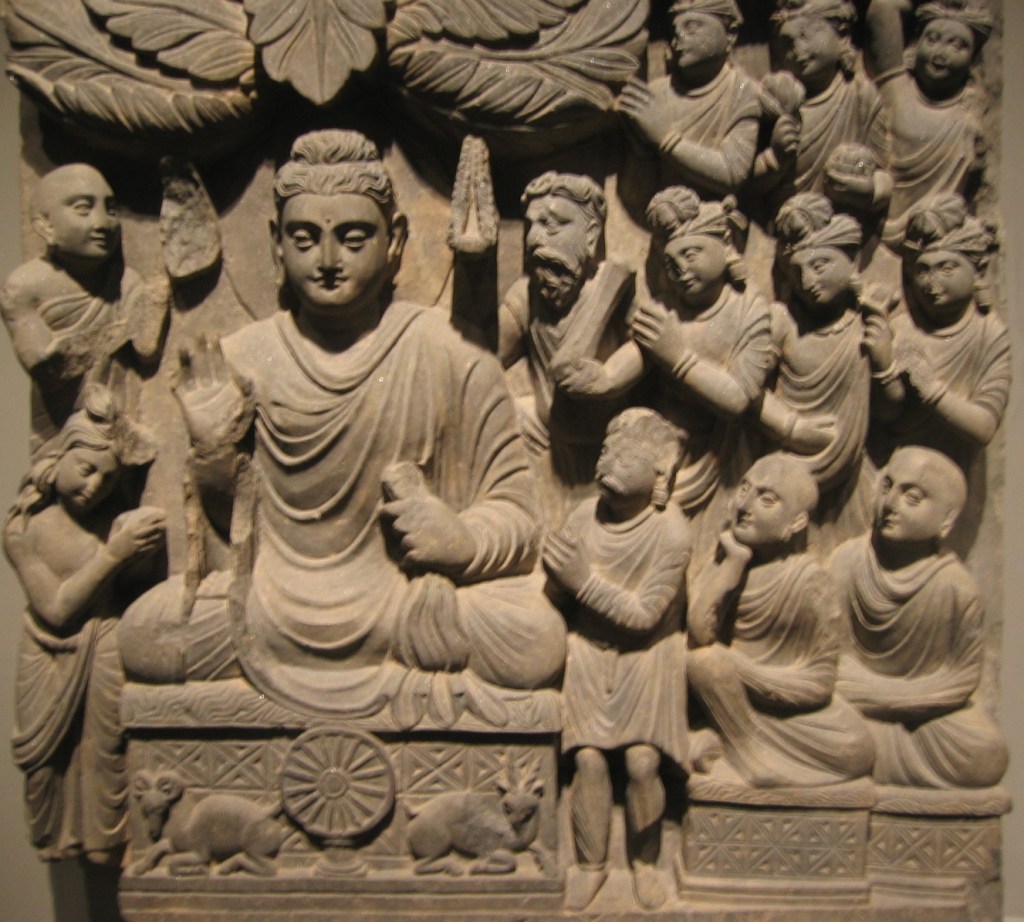
The Middle-Length Agama (MA) is Taisho No. 26, which spans 60 fascicles and 388 pages of the Taisho Daizokyo, Vol. 1. To put this in perspective, a page of Taisho prose typically translates to 1,500 words of English, so a complete translation of MA will probably be 600,000-700,000 words in length. In addition to this… Continue reading
-
Book Review: The Dharma of Dragons and Demons (David Loy & Linda Goodhew)
Fantasy is true, of course. It isn’t factual, but it is true. Children know that. Adults know it too, and that is precisely why many of them are afraid of fantasy. They know that its truth challenges, even threatens, all that is phony, unnecessary, and trivial in the life they have let themselves be forced… Continue reading
-
Book Review: The Diamond Sutra (Red Pine)
Red Pine’s The Diamond Sutra: Text and Commentaries Translated from Sanskrit and Chinese is a book that I recommend to readers who want to explore the various Diamond Sutra translations and exegesis that remains untranslated today. In this book, Red Pine presents a translation of the sutra based on his studies of the Sanskrit and… Continue reading
-
Wealth, Knowledge, and Wisdom
Human beings are like rats: We like to acquire things. I recall a rat I once took care of for a friend. I had never known a rat before, so it was a learning experience. The most striking thing about the rat to me was that it had a home, a little dome in which… Continue reading
-
The Place of the Chinese Āgamas in Buddhist Literature
The Chinese Buddhist canon is unique in that it contains a record of the scriptures and philosophical texts that were circulating in Central Asia and India during the peak of Buddhist literary creativity between 0 CE and the arrival of Islam. Most of the major works were translated several times over a period of about… Continue reading
-
Weekly Update: Agamas and Dharmapadas

It’s been over a month since my last update on my translation work. I began the year with a general idea of updating my previous translations that needed polishing and correction, and I republished a much improved edition of Kumarajiva’s Diamond Sutra in February. In March things changed somewhat when I rediscovered some of my… Continue reading
-
Book Review: The Diamond That Cuts Through Illusion (Thich Nhat Hanh)
The Diamond that Cuts through Illusion is Thich Nhat Hanh’s translation and commentary on the Diamond-Cutting Perfection of Wisdom Sutra, which was first published by Parallax Press in 1992. The English translation from Kumarajiva’s Chinese was led by Hahn with the help of Annabel Laity and Anh Huong Nguyen. Hahn’s commentary on the Sutra was… Continue reading
-
Diamond Sutra: Dharmas, Laws, and Notions
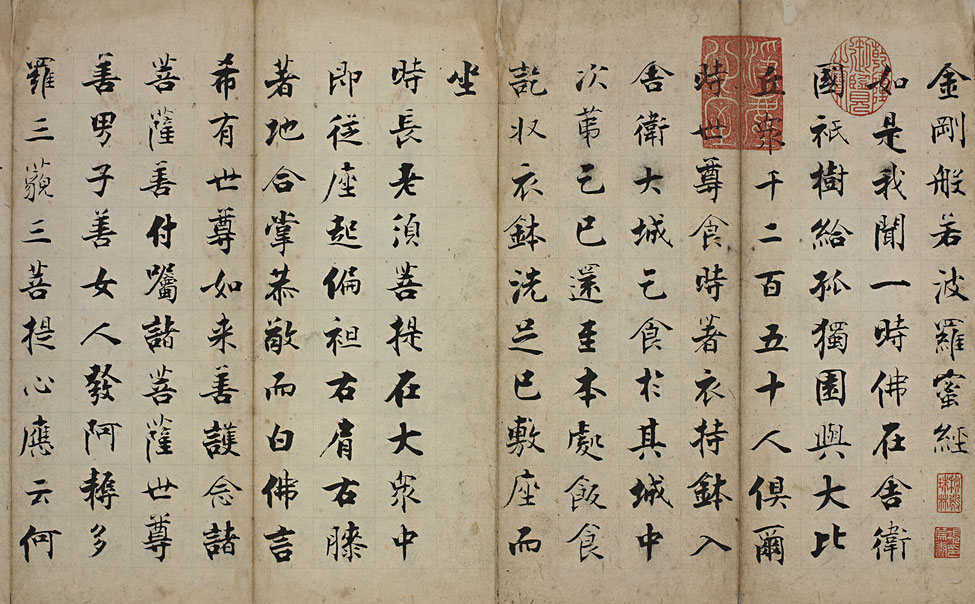
Today, I want to continue with a short explanation of the specific meanings of the term “dharma” in the Diamond Sutra. Yesterday, I narrated a contemplation about baseballs to demonstrate how I understand the Diamond Sutra‘s insistence that named things are just names. In the process I explained the very general use of “dharma” in… Continue reading
-
Diamond Sutra: A Baseball Is Not a Baseball; It’s Called a Baseball
The Diamond Sutra addresses a number of Buddhist concepts and themes but at the core of its mystery is an unexplained formula that is repeated over and over. It can be summarized as a sort of equation: X is not X. This is called X. The Sutra authors apply this equation to many things: The… Continue reading
 Dharma Pearls